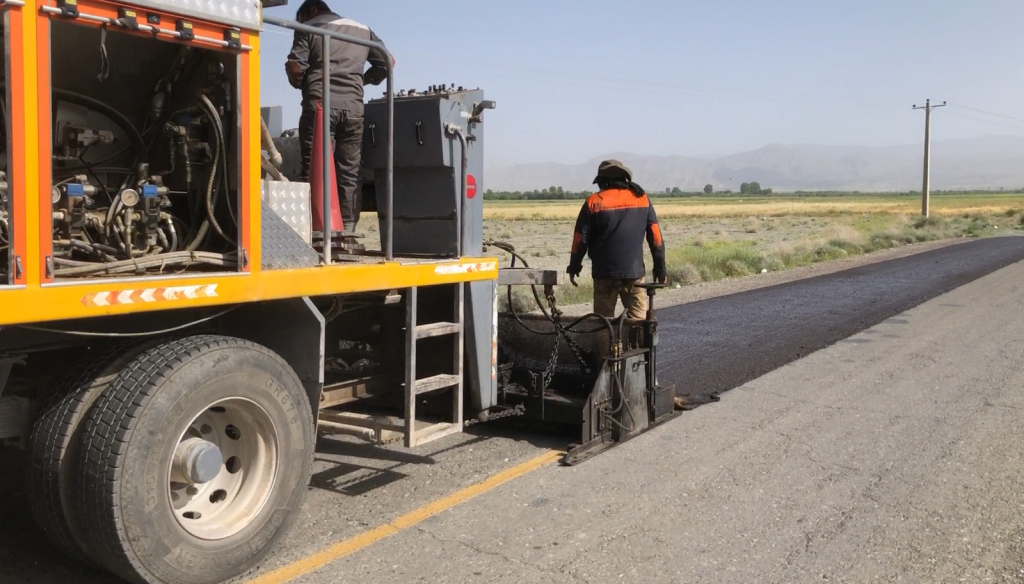


What is Microsurfacing?
The history of microsurfacing technology dates back to less than half a century ago, when asphalt was first applied as a thin, protective layer on the road surface.
Microsurfacing is known as a method for protecting asphalt surfaces and a preventive measure. It is a protective repair layer and this layer does not have load-bearing capacity.
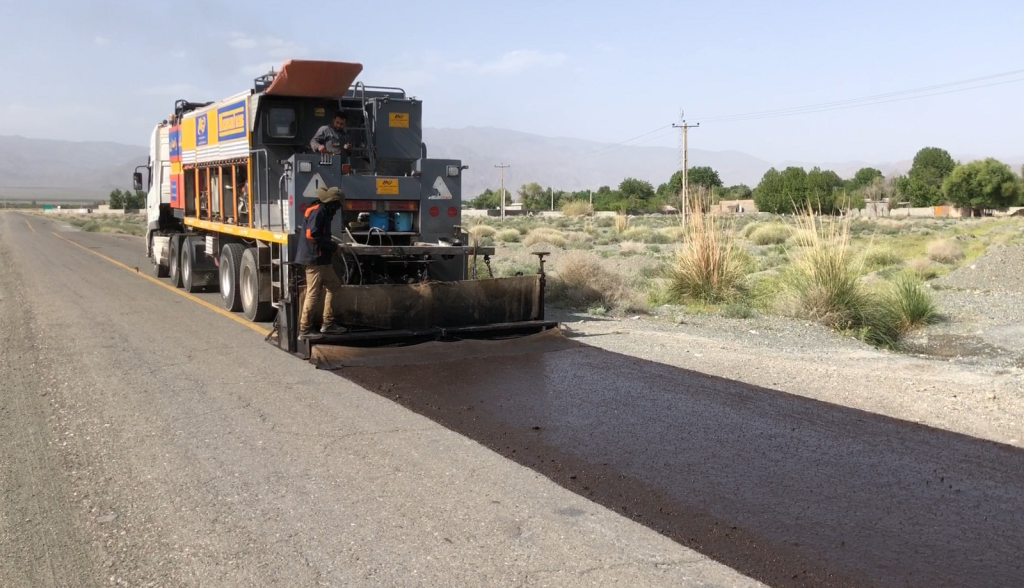
Microsurfacing is a mixture of finely ground aggregates, polymer emulsion bitumen, fillers and other materials. Microsurfacing is used to fill ruts and ruts, fill cracks, and repair oxidized road surfaces, create a uniform surface, and increase the useful life of the road.
This method seals the road surface and provides proper friction. The use of this method has yielded successful results, and its use in pavement repair and maintenance projects is expanding every day, and it does not cause environmental problems due to the use of emulsion bitumen.
Microsurfacing has a longer useful life than other protective coatings due to its high quality and durability. The high speed of implementation of this type of coating reduces the risks and problems caused by traffic and endangering the safety of road users to a minimum. Due to its low thickness, there is no need to repair shoulders or replace curbs after implementation, and traffic can pass over it after about an hour after implementation.
Microsurfacing is a combination of 100% crushed, well-grained, compacted sand and modified polymer emulsion bitumen, along with water and filler, and if necessary, additives that control the time of emulsion breakdown. These materials are mixed together using special equipment and take on the same quality and then spread evenly on the road surface with a special microsurfacing machine. This operation is done continuously and at the same time, so that the preparation and spreading of the mixture are done with one machine and simultaneously. The emulsion bitumen in the mixture is broken after spreading on the road surface and the water in it evaporates or leaves the road surface, leaving a hard and solid mixture.
The difference between microsurfacing and slurry seal is in the type of emulsion bitumen, as in slurry seal, there is no polymer emulsion bitumen.